
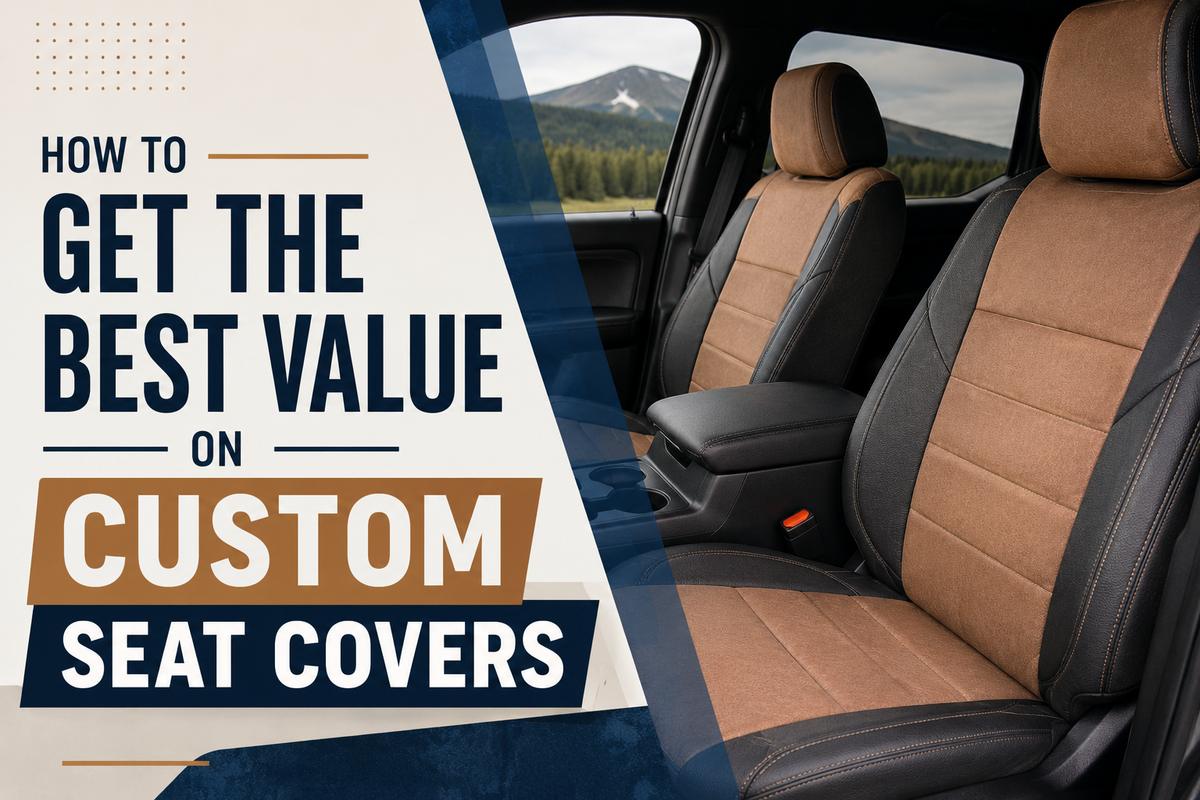
This guide runs the decisions in the order that protects your money: fit first, material second, price and warranty terms last. It also flags where sellers blur the line between custom, semi-custom, and universal, because that is where most buyers lose the value they thought they were paying for.
Key takeaways
- Fit is the first filter, not the last. A cover cut for your exact year, make, model, and seat configuration covers more surface area, stays put, and wears evenly.
- Material should follow how you use the vehicle, not how the fabric looks in a product photo. Waterproof synthetics suit dogs and wet gear, while sheepskin and leatherette suit comfort and appearance.
- Cost per year of service is the number worth comparing between two sets, not the sticker price.
- Warranty wording matters more than warranty length, because nearly every policy in this category excludes normal wear and tear.
- Semi-custom and universal covers are a reasonable buy for short-term or low-use vehicles, but they rarely look right on complex seats with airbags, consoles, and integrated belts.
What does the best value on custom seat covers actually mean?
Value in custom seat covers is the total cost of keeping your seats protected and presentable, divided by the number of years you get out of the set. Sticker price is only one input. A set that fits precisely, uses a material suited to your climate and your cargo, and carries a written workmanship warranty usually costs more up front and less per year of ownership.
Three factors drive that math. Coverage is the first: a cover that wraps the bolsters, the seat back, and the outer sides shields far more of the original upholstery than a slip-on that only shades the cushion. Fit is the second: loose fabric slides under you every time you get in, and sliding fabric abrades at the seams until it splits. Serviceability is the third: covers that come off easily for washing get cleaned instead of getting replaced.
What buyers tell us most often is that they regret the first cheap set, not the second good one. If you plan to keep the vehicle longer than two or three years, the durable set generally wins on cost per year.
Should you choose fit, material, or price first when buying custom seat covers?
Work in that order: fit, then material, then price. Fit is the only variable you cannot correct after the box arrives. If the pattern was not cut for your seat, no material upgrade will fix a cover that bunches at the bolster or pulls away from the headrest post.
Fit means the pattern was built for your exact year, make, model, submodel, and seat configuration. Two trucks from the same model year can carry completely different seats depending on trim, so the seat description matters as much as the badge on the tailgate. Before you order, confirm the pattern accounts for:
- Airbag compatibility, including side-impact seams built to release on deployment
- The correct headrest style, whether integrated, adjustable, or fully removable
- Cutouts for armrests, seat levers, lumbar dials, and belt receivers
- Access to under-seat storage and rear seat fold or flip mechanisms
- Heated and cooled seat function, if your vehicle has it
Material comes second because it is a lifestyle decision rather than a quality ranking. Price comes last because once fit and material are locked in, you are finally comparing like for like, which is the only condition under which a price comparison tells you anything useful.
How do you tell true custom-fit seat covers from semi-custom and universal covers?
The word custom gets used loosely across the automotive aftermarket, and the difference shows up on your seats rather than in the product listing. True custom-fit seat covers are cut from patterns built for one specific vehicle and seat configuration, frequently on computer-cut equipment, and are sewn after you place the order. Semi-custom covers are cut to a common seat shape, such as a bucket or a 40/20/40 bench, and fit closer than universal while still leaving gaps around trim. Universal covers are a single shape stretched over whatever you own.
There is a quick field test at checkout. A true custom seller asks for year, make, model, submodel, and a seat description, usually with reference photos so you can identify your exact seat. If the only question is what type of vehicle you drive, you are buying universal no matter what the headline says.
| Cover type | How it is cut | Typical fit quality | Best for | Main trade-off |
| Custom fit | Patterns cut for your exact year, make, model, and seat configuration, then made to order | Follows the factory contours and stays in place | Vehicles you plan to keep, work trucks, family vehicles, lease returns | Highest price and a production lead time |
| Semi-custom | Cut to a common seat shape such as a bucket or 40/20/40 bench | Close, with gaps at trim, levers, and seams | Older vehicles, second cars, simple seats | Loose areas shift and wear faster |
| Universal | One shape stretched and strapped over any seat | Loose, and it moves with use | Short-term protection, temporary messes, quick resale prep | Rarely looks right and can block controls |
Choose true custom fit if you are keeping the vehicle more than a couple of years, the seats have airbags or complex controls, or the interior condition will affect what you get on trade-in. Choose semi-custom when the seat shape is simple, the vehicle is older, and basic protection matters more than appearance. Choose universal only when the need is genuinely temporary, for example while a puppy is in the house or a renovation project is filling your back seat.
Which seat cover material gives you the best value for how you drive?
The right seat cover material comes from how you use the vehicle, not from how the fabric photographs. Seat cover materials sort into a few families: cotton blends including canvas, duck weave, and tweed; leather and its synthetic version, leatherette; and synthetics such as neoprene and neosupreme, which are built for moisture protection. Neoprene is a synthetic rubber, while neosupreme blends neoprene with polyester to reach a lower price point with a similar look and feel.
Read the table below against your own week. If you load wet gear, a dog, or tools more than once a week, protection should outrank softness. If your vehicle is a long daily commute in a hot or cold climate, comfort and insulation earn their keep.
| Material | Best for | Strengths | Watch out for | Relative cost |
| Neoprene | Wet gear, dogs, gym bags, boat and beach use | Water resistance, stretches into a snug fit, adds cushioning | Can hold odor if it is never washed | Higher |
| NeoSupreme | Everyday drivers who want the neoprene look for less | Similar feel and appearance at a lower price | Water resistant rather than fully waterproof | Mid |
| Ballistic nylon or Cordura-type fabric | Work trucks, tools, job sites, pet claws | Strong abrasion, scuff, and stain resistance | Stiffer and less soft against skin | Mid to higher |
| Cotton canvas or duck weave | Farm, utility, and hot-climate use | Tough, breathable, machine washable | Absorbs liquid unless it is treated or coated | Lower to mid |
| Leatherette | Buyers who want a factory-leather look | Wipes clean, consistent color, upscale appearance | Benefits from conditioning, and it swings hot and cold | Mid to higher |
| Sheepskin | Long commutes, extreme climates, comfort first | Insulates in both hot and cold weather, very comfortable | Highest care requirement and highest price | Highest |
Choose a waterproof synthetic if liquids are your main risk, meaning kids, dogs, fishing, surfing, or snow gear. Choose ballistic or canvas-type fabric when abrasion is the risk instead, such as tool belts, buckles, and claws. Choose leatherette if you want the interior to look upgraded rather than covered. Choose sheepskin when comfort on a long drive is the point, and you are willing to follow the care instructions.
How much should you expect to spend on custom seat covers?
There is no single national price for custom seat covers, because the number moves with how many rows you cover, which material you choose, and how complicated your seats are. What you can do is understand the price drivers so a quote makes sense instead of feeling arbitrary. Two quotes that look far apart are often covering different amounts of the vehicle.
| What changes the price | Why it matters | Typical effect on price |
| Rows covered | Front only, rear only, or a full set are three different products | Largest single price driver |
| Material grade | Sheepskin and premium neoprene sit well above polyester blends | Significant increase |
| Seat complexity | Consoles, integrated belts, and power controls require more pattern pieces | Moderate increase |
| Airbag-compatible construction | Release seams and specific thread add production steps | Moderate increase |
| Custom touches | Embroidery, two-tone panels, and piping are add-ons | Add-on cost per option |
| Shipping and cross-border fees | Free-shipping thresholds and duties change the landed cost | Varies by seller and destination |
Once you know the drivers, the budget question gets simpler. The table below is the honest version of the trade-off between a cheap set and a premium made-to-order set.
| Budget or universal set | Premium custom set | |
| Pros | Low up-front cost, ships fast, fine for a short ownership window | Precise fit, better materials, longer service life, presents well at resale |
| Cons | Shifts and wears at the seams, can cover controls, replaced sooner | Higher up-front cost and a made-to-order lead time |
Choose the budget set if you are selling the vehicle inside a year, the seats are already damaged, or you only need coverage for one messy season. Choose the premium custom set when the vehicle is a keeper, the seats are still in good condition and worth protecting, or the interior is part of what you are selling later.
What questions should you ask before you place a custom seat cover order?
The strongest predictor of a good outcome is how much the seller wants to know about your seats before taking your money. Ask these questions in writing, and treat vague answers as the answer:
- Are these patterns cut for my exact year, make, model, submodel, and seat description?
- Are the covers airbag compatible for my specific seats?
- Will heated or cooled seats still work normally with these covers installed?
- What is the fitment guarantee if I entered my vehicle details correctly and they still do not fit?
- What does the warranty cover, and what does it exclude?
- What is the return window on made-to-order goods, and who pays return shipping?
- What is the current production and delivery time?
- Are the covers machine washable, and at what setting?
- Where are they manufactured, and are replacement pieces available if one panel fails?
One more worth asking: can I see a photo of this exact material on my exact seat model? Sellers with real pattern libraries can usually produce one, and that single photo prevents most of the disappointment in this category.
What warranty, fitment, and return terms should you look for?
Read the coverage terms before you read the reviews. Most seat cover warranties cover defects in workmanship and materials, and most exclude daily wear and tear, accidental damage, and problems caused by improper installation. That is normal and reasonable, but it means the warranty is a manufacturing promise rather than a durability promise. Buyers who miss that distinction are the ones who feel misled two years later.
Three terms are worth confirming in writing before you order:
- The fitment guarantee, meaning what happens if the covers do not fit when the vehicle information you supplied was correct
- The warranty period and the specific exclusions attached to it
- The return policy on made-to-order goods, which is usually stricter than for stock items because production begins after you order
Time in business is a fair proxy for whether a company will still be around to honor a claim. ShearComfort has been making custom-fit seat covers since 1983 and publishes both a fitment guarantee and a written warranty alongside its products, which is the level of documentation to look for from any maker you compare.
When does buying custom seat covers make sense, and how do you compare your options?
When it makes sense
Custom seat covers make financial sense when the seats underneath are still worth protecting, and the vehicle has real time left in your driveway. Work trucks, family haulers, dog vehicles, and anything with cloth seats in a wet climate are the clearest cases. Leased vehicles are another, since wear charges at turn-in are assessed against the original upholstery.
How to compare your options
Compare on four things in this order, and only against sets that fit your exact seats: coverage, meaning how much of the seat is actually wrapped; material match to your weekly use; the written fitment guarantee and warranty exclusions; and finally landed price including shipping. Put the quotes side by side on those four lines. A quote that wins on price and loses on the first three is not the cheaper option; it is the shorter-lived one.
What results to expect
With a properly fitted set, expect the covers to sit tight against the contours, stay put when you slide in and out, keep controls and belts accessible, and take spills without reaching the original upholstery. Expect a break-in period of a few days where the material relaxes into the seat shape. Do not expect covers to hide existing damage, restore a torn seat, or eliminate all wear on high-contact edges.
What mistakes cost custom seat cover buyers the most money?
The expensive mistakes in this category are almost always made before checkout, not after. These are the ones that come up again and again in returns and complaints:
- Ordering by vehicle model alone and skipping the seat description, which is where most fitment failures originate
- Buying for the photo instead of the use case, then discovering the fabric is wrong for dogs, tools, or heat
- Treating a long warranty as a durability guarantee when wear and tear is excluded
- Covering front seats only, then watching the rear bench take the damage that actually shows at resale
- Ignoring airbag compatibility, which is a safety issue rather than a comfort one
- Buying universal covers for seats with consoles, integrated belts, or power controls
- Skipping installation instructions and blaming the fit for what was really a loose strap
Almost every one of these is avoidable with ten extra minutes at the ordering screen. In practice, the buyers who take those ten minutes are the ones still happy with the same set several years later.
How do you protect the value of your seat covers after they arrive?
Install them properly the first time. Most covers use a strap, buckle, and hook system that has to be pulled through and cinched from underneath, and a set that is half-installed will look wrong and wear unevenly no matter how good the pattern is. Take the time to seat the covers fully into the crease between the cushion and the seat back, then tighten in stages rather than all at once.
After that, care is simple, and it is what separates a set that lasts from a set that does not. Follow the manufacturer’s care instructions rather than general advice, since washing rules vary by material. Vacuum grit out of the seams, since abrasive dirt is what cuts stitching over time. Clean spills while they are fresh instead of letting them set. Remove and wash covers on a schedule if the material allows it, rather than waiting until they look dirty.
Frequently Asked Questions
Are custom seat covers worth the extra money over universal ones?
For a vehicle you are keeping, usually yes. Custom covers protect more of the seat, stay in position, and keep controls accessible, so they last longer and present better at resale. For a vehicle you are selling soon or a seat that is already damaged, universal covers can be the smarter spend.
Do custom seat covers work with side airbags?
Quality custom covers for airbag-equipped seats are built with release seams designed to let the side airbag deploy through the cover. Not every cover in every material is airbag compatible, so confirm compatibility for your exact seat before ordering rather than assuming it.
Will seat covers void my vehicle warranty or affect heated seats?
Seat covers do not void a factory vehicle warranty on their own. Heated and cooled seat function depends on the material and construction, since thick or non-breathable fabrics can reduce airflow and heat transfer. Ask the seller directly whether the specific material you want is rated for heated and ventilated seats.
How long do custom seat covers usually last?
Service life depends far more on material and use than on brand. A waterproof synthetic in a family vehicle behaves very differently from canvas in a work truck. The reliable answer is to compare warranty terms and care requirements rather than lifespan claims.
Can I order custom seat covers for only the front seats?
Yes, and most makers sell rows separately. It is a common way to control cost, but remember that the rear bench takes visible wear too, especially with kids, pets, or cargo. If the interior condition matters at resale, covering both rows protects the part a buyer will look at.
What is the single best way to avoid a bad fit?
Identify your seat, not just your vehicle. Match your actual seats to the seller reference photos for headrest style, console or bench configuration, and armrest type before you order. Fitment problems trace back to that step far more often than to manufacturing.
Where should you go from here?
Getting the best value on custom seat covers comes down to sequencing: confirm the pattern fits your exact seats, pick the material based on how you use the vehicle, then compare price against warranty and fitment terms rather than against a number on its own. Do it in that order, and the cheap-set-twice cycle stops.
Read more guides like this one to keep sharpening how you evaluate automotive interior products before you buy.

AUTHOR
Lovel is a contributor at OC Partnership, focusing on business trends, marketing, technology developments, and industry insights that help professionals stay informed and make better decisions. With a practical, research-driven approach, Lovel delivers clear and accessible content designed for business owners, marketers, and professionals.